Commercial Privacy Trees for Profit, Luxury Landscaping, and High-Density Hedge Production
Privacy hedges are one of the most profitable segments in the ornamental nursery industry because they combine fast turnover crops with high landscape demand. In markets like Southern California, estates, commercial properties, and residential developers consistently pay premium pricing for mature, uniform privacy screens that provide immediate visual blockage.
Success in this niche is not only about plant selection—it is about production efficiency, container strategy, and root quality control from seedling to finish size.
Why Privacy Trees Are a High-Profit Nursery Crop
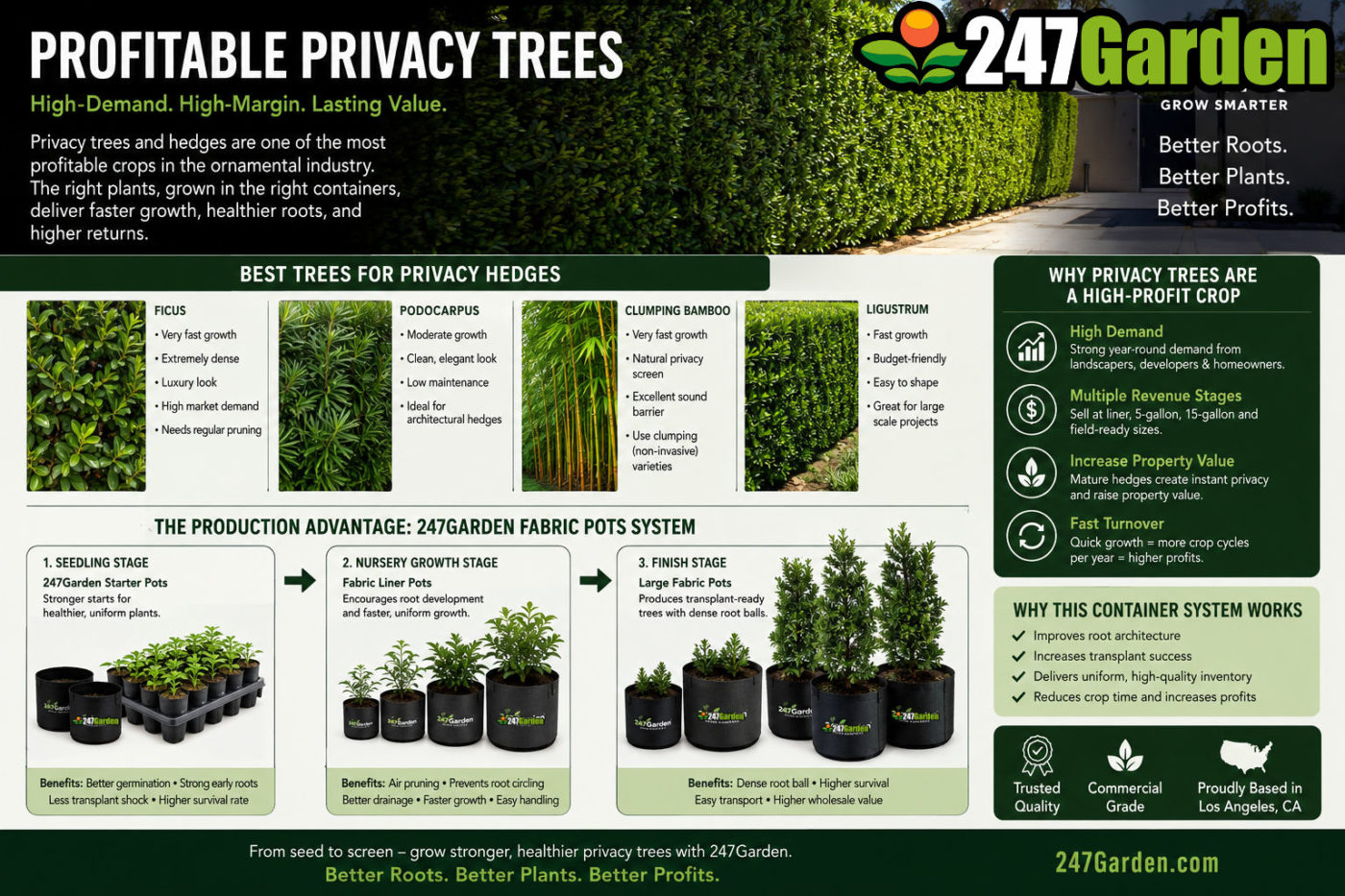
Privacy trees and hedge species such as ficus, podocarpus, bamboo, and ligustrum are profitable because they:
- Grow quickly in controlled nursery environments
- Can be sold at multiple stages (liner, 5-gallon, 15-gallon, field-ready)
- Have strong repeat demand from landscapers and developers
- Increase property value significantly upon installation
The key advantage is that each plant can pass through multiple value stages, turning a low-cost seedling into a high-margin landscape product.
Best Trees for Privacy Hedge Production
1. Ficus (Luxury Standard Hedge Crop)
Ficus is the dominant privacy hedge in high-end landscaping markets.
- Growth rate: Very fast
- Height potential: 10–40 ft (easily maintained at hedge height)
- Market use: Luxury estates, commercial screening, sound barriers
Pros:
- Extremely dense foliage for full visual blockage
- Fast turnover cycles in nursery production
- High resale value in 15-gallon and larger sizes
Cons:
- Requires regular pruning for uniform structure
- Aggressive roots in landscape settings
Ficus is the highest-margin crop when managed correctly due to its demand in luxury residential markets.
2. Podocarpus (High-End Architectural Hedge)
Podocarpus is widely used in modern luxury landscaping.
- Growth rate: Moderate
- Height: 8–25 ft
- Market use: Clean architectural hedges, HOA developments
Pros:
- Very stable long-term growth
- Clean, formal aesthetic
- Lower maintenance than ficus
Cons:
- Slower production cycle than ficus
- Higher time-to-market cost
This species is ideal for premium, design-driven landscape projects.
3. Clumping Bamboo (Fastest Privacy Screen)
Bamboo is used for rapid privacy installation and resort-style landscaping.
- Growth rate: Very fast
- Height: 10–40 ft
- Market use: Resorts, modern homes, sound barriers
Pros:
- Fastest full-screen coverage
- Strong visual and acoustic privacy
- High demand in modern landscape design
Cons:
- Requires clumping (non-invasive) varieties
- Needs consistent water management
4. Ligustrum / Wax Myrtle (Budget Hedge Crop)
Ligustrum is commonly used for cost-sensitive projects.
- Growth rate: Fast
- Height: 6–15 ft
- Market use: Commercial developments, budget hedging
Pros:
- Low production cost
- Fast early growth
- Easy to propagate
Cons:
- Lower luxury market value
- Requires frequent trimming
The Hidden Profit Factor: Container Production System
Most growers underestimate the importance of container selection. However, container strategy directly affects:
- Root architecture quality
- Growth speed
- Transplant survival rate
- Wholesale pricing consistency
A structured container system improves uniformity, which is critical for hedge installations where buyers expect identical plants.
Recommended Production System Using 247Garden Containers
247Garden provides a scalable container system suitable for commercial hedge production from propagation to finish size.
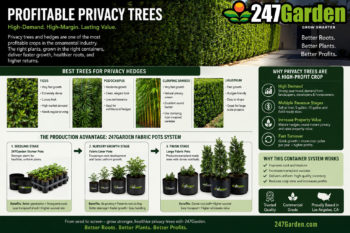
1. Seedling Stage: 247Garden Starter Pots
At the propagation level, uniform germination is essential for commercial efficiency.
Using 247Garden Starter Pots at this stage supports:
- Even germination rates across trays
- Strong early fibrous root development
- Reduced transplant shock when moving to liner pots
- Higher survival rates during scaling
For crops like ficus, podocarpus, and bamboo, early root structure determines final hedge density and resale value.
2. Nursery Growth Stage: Fabric Liner Pots
After seedlings establish, fabric liner pots become critical for accelerating root mass development.
Benefits include:
- Air pruning to prevent root circling
- Faster root branching and biomass development
- Improved drainage for fast-growing hedge species
- Easier spacing and handling in nursery rows
This stage is where growers begin differentiating profit margins. Faster root development means faster crop turnover cycles.
3. Finish Stage: Larger Fabric Pots for Market-Ready Trees
At 5-gallon to 25-gallon production sizes, fabric pots support final hedge quality.
Advantages:
- Dense, transplant-ready root balls
- Lower installation failure rates for landscapers
- Easier transport and handling for wholesale buyers
- More uniform canopy structure across inventory
This stage directly affects wholesale pricing, especially for premium ficus and podocarpus hedges used in luxury installations.
Why Fabric Pot Systems Increase Profitability
A staged fabric container system improves nursery economics in three key ways:
- Faster production cycles
- Higher plant survival rates after transplant
- More uniform hedge inventory for wholesale buyers
Uniformity is especially important in privacy hedge contracts where buyers require consistent height, density, and appearance across long installations.
Luxury Landscaping and Market Demand
High-end residential and commercial properties consistently prefer:
- Dense green walls instead of fencing
- Multi-layer hedge systems
- Clean architectural planting lines
- Mature-looking instant privacy screens
Ficus and podocarpus dominate this segment due to their visual density and controllability. Bamboo is increasingly used for modern resort-style aesthetics.
In premium markets, privacy hedges are not just functional—they are a design feature that increases perceived property value.
Conclusion
The privacy hedge market is one of the most scalable and profitable segments in ornamental horticulture, but success depends on production efficiency, not just plant selection.
Growers who integrate structured container systems—starting with 247Garden Starter Pots at the seedling stage and scaling through fabric pots for liner and finish production—achieve faster turnover, more consistent inventory, and higher wholesale acceptance rates.
In this business, uniformity equals profitability, and root quality determines long-term success.
-
-
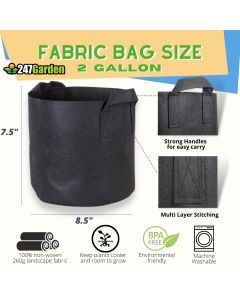
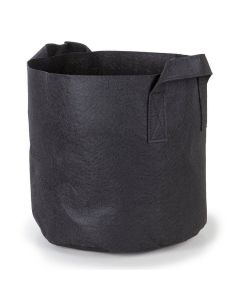
 247Garden 3-Gallon Aeration Fabric Pot/Plant Grow Bag w/Handles (Black 9H x 10D)Special Price $0.75 Regular Price $1.24155067 in stock
 -
 247Garden 5-Gallon Aeration Fabric Pot/Plant Grow Bags w/Handles (Black 10H x 12D)$1.4937938 in stock
 -
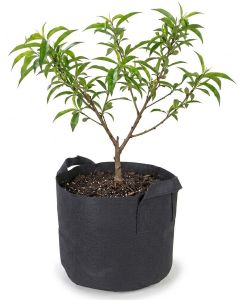 247Garden 10-Gallon Aeration Fabric Pot/Plant Grow Bag w/Handles (Black 13H x 15D)Special Price $2.25 Regular Price $2.4831526 in stock
 -
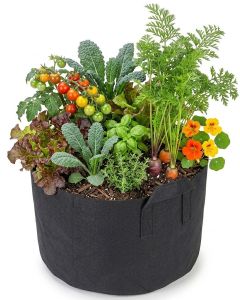 247Garden 15-Gallon Aeration Fabric Pot/Plant Grow Bag w/Handles (Black 14.5H x 17D)Special Price $2.75 Regular Price $2.99112956 in stock
 -
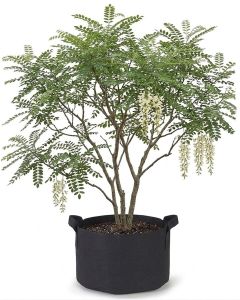 247Garden 20-Gallon Aeration Fabric Pot/Plant Grow Bag w/Handles (Black 16H x 19D)Special Price $2.99 Regular Price $3.4892269 in stock
 -
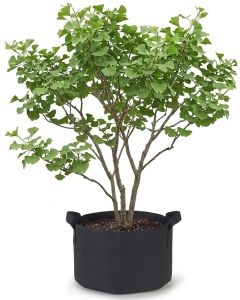 247Garden 25-Gallon Aeration Fabric Pot/Plant Grow Bag w/Handles (Black 16.5H x 21D)Special Price $3.49 Regular Price $3.9932677 in stock
 -
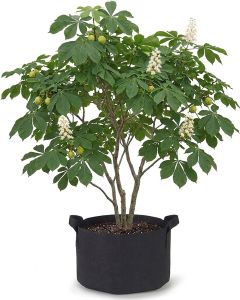 247Garden 30-Gallon Aeration Fabric Pot/Plant Grow Bag w/Handles (Black 15.5H x 24D)$4.6837783 in stock
 -
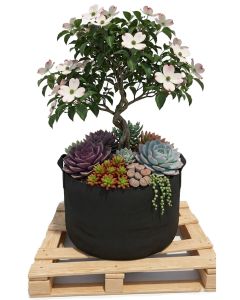 247Garden 40-Gallon Aeration Fabric Pot/Plant Grow Bag w/Handles (Black 17H x 26.5D)Special Price $4.50 Regular Price $4.9914639 in stock