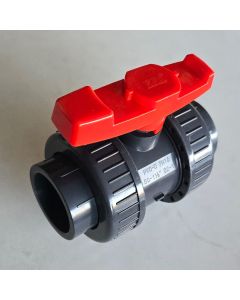
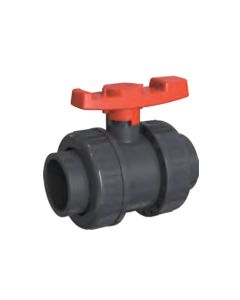
What does the arrow on the ball valve body mean?
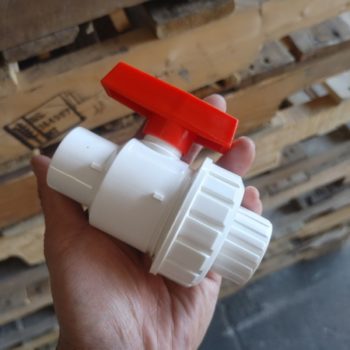
When you inspect a ball valve, the arrow simply points to a direction of preferred flow indicated by the manufacturer.
- In many cases it simply shows the pressure-bearing direction or “recommended” flow.
- In other cases the valve is designed only to flow in that direction (a unidirectional ball valve) and has internal features (single‐seat design, cavity relief holes) that require that orientation.
- For many standard garden‐grade ball valves, the seats are symmetrical and the valve is actually bidirectional, meaning flow either way is acceptable.
Bottom line: If there’s an arrow, treat it as a guideline. If your installation forces reverse flow, first check whether the manufacturer labels the valve as bidirectional. If not, you risk compromised sealing or internal stress.

Can you install a ball valve backwards (opposite the arrow)?
You can, but you should proceed with caution:
- If the valve is bidirectional, yes, you can install it opposite the arrow and still expect good performance.
- If the valve is unidirectional, installing it backwards may lead to:
- Poor sealing/lower performance
- Internal relief features (if present) oriented incorrectly
- Potential for premature wear or leakage
- If your piping layout forces you to reverse the valve, strongly consider replacing with a valve that supports reverse flow (or one clearly bidirectional).
What about single-union vs. double/true-union ball valves?
When choosing which design to use for your garden system, here are the key considerations:
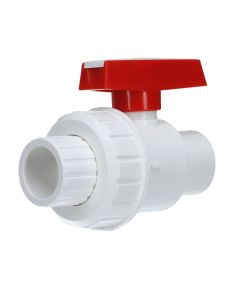
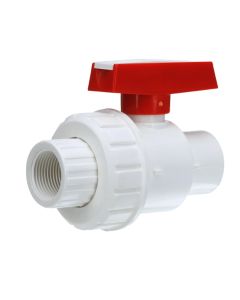
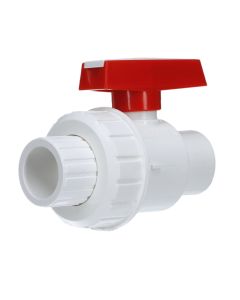
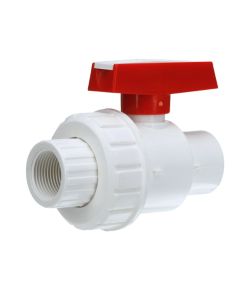
Single-Union Ball Valve
- Has a union connection on one side, and a fixed connection on the other.
- Generally lower cost.
- Good for “end-of-line” installations where you don’t anticipate removing the valve often.
- If you ever need to service or remove the valve and the piping is fixed on the non-union side, you may have to cut or disrupt the piping.
Double-Union / True-Union Ball Valve
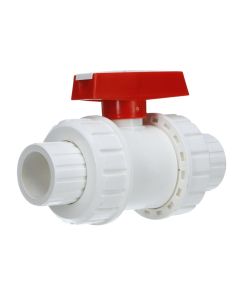
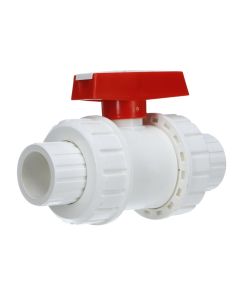
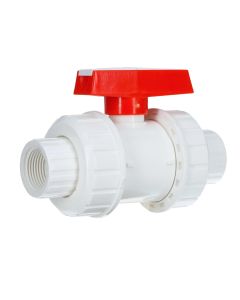
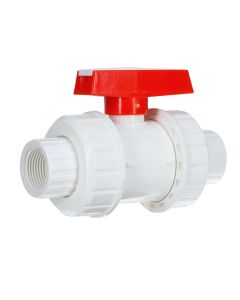
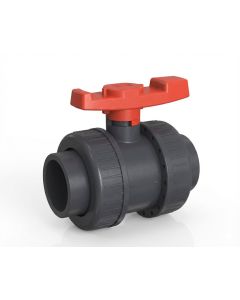
- Has unions on both sides of the valve body.
- Allows the valve body to be removed completely, leaving the pipe ends intact -- ideal for maintenance or retrofit.
- Slightly higher cost and more space may be required.
- Recommended for installations in the middle of the line, around pumps, filters, or where access is important.
When you must run the valve “backward” (reverse flow)
- The orientation issue (arrow vs. flow) is separate from the union type.
- If you have a unidirectional valve, switching to a double-union doesn’t fix the flow‐arrow constraint—it only helps in maintenance.
- So if reverse flow is required by your layout:
- Choose a valve rated bidirectional, and/or
- Choose a double-union design if you want easier future access.
- If you opt for a standard single-union ball valve because budget is constrained and you expect normal flow orientation, fine—but if you anticipate future maintenance or changes, going with double-union is safer.
247Garden’s Recommended Ball Valves (½″ to 4″)
Here at 247Garden we stock quality ball valves for garden, irrigation, pool and landscaping systems. We recommend selecting valves that match your pipe size, material (PVC, CPVC, brass), and service requirements. Here are general guidelines:
- For most simple on/off shut‐off in non-critical branch lines: a single-union ball valve (½″ to 2″) is sufficient.
- For main lines, pump in/out, filter bypasses, or larger systems (3″, 4″) where you may service the valve: a double-union/true-union ball valve is worth the investment.
- Always check manufacturer specs for directional arrow and bidirectional rating.
Recommended Products:
- ½″ Single Union Ball Valve – PVC – Use for simple branch shut‐off.
- 1″ Single Union Ball Valve – PVC – Typical irrigation line isolation valve.
- 2″ Single Union Ball Valve – PVC – Good for larger mainline shut‐off near manifold.
- 1½″ Double Union Ball Valve – PVC – For filter bypasses or pump connections.
- 3″ Double Union Ball Valve – PVC – Ideal for large irrigation system mainline.
- 4″ Double Union Ball Valve – PVC – For commercial-scale garden/landscape irrigation systems.
(Ensure compatibility with your pipe schedule, service pressure, temperature and media.)
Key Takeaways for Garden Installers
- The arrow on the valve body means “recommended flow direction” and may indicate whether the valve is unidirectional or bidirectional.
- If installing opposite the arrow, verify the valve is rated for reverse flow or choose a bidirectional valve.
- Use a single-union ball valve for simple, end-of-line shut‐off installations.
- Use a double-union/true-union ball valve when you want full serviceability (middle of line, near pumps/filters) or expect future removal/replacement.
- At 247Garden, choose the right size (½″ to 4″), right material, and right union configuration based on your system layout and future needs.
We hope this article at 247Garden gives you clarity on how to choose and install ball valves correctly for your garden or irrigation system. If you have any questions on sizing, materials or how to integrate into your layout, feel free to reach out to our technical support team.
Happy installing!
— The 247Garden Team