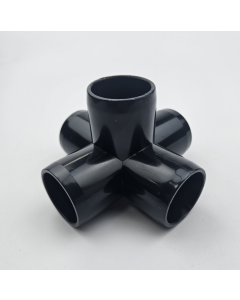
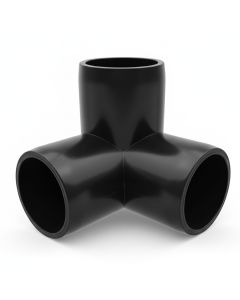
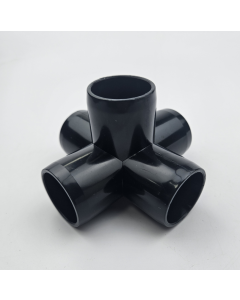
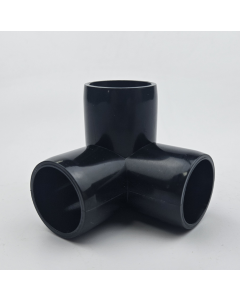
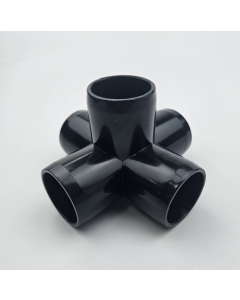
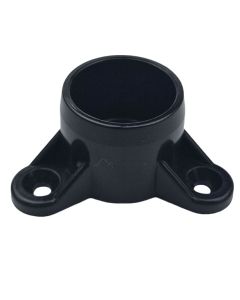
Does Black PVC fitting retain heat?
Yes, black PVC fittings do tend to retain more heat than their white or light-colored counterparts due to their color. Here's why:
1. Color and Heat Absorption
Black surfaces absorb more sunlight compared to lighter colors. When exposed to direct sunlight or other heat sources, black PVC fittings can become warmer than white PVC fittings. This is especially noticeable in outdoor installations, where black PVC fittings may absorb and retain heat from the sun, potentially causing them to become hot to the touch.
2. Material Conductivity
PVC itself is not a great conductor of heat, meaning it doesn’t transfer heat as quickly as metals like copper or steel. While black PVC fittings will absorb more heat, they won’t necessarily cause heat-related issues unless exposed to extreme temperatures for long periods.
3. Impact on Performance
In typical applications, the slight increase in heat retention with black PVC fittings is unlikely to impact performance, especially when used in low-pressure or non-extreme temperature environments, such as irrigation systems or indoor plumbing. However, if used in high-temperature environments or direct sunlight for extended periods, it’s essential to monitor potential heat-related expansion or softening.
4. Temperature Ratings
Most Schedule 40 PVC fittings, including black ones, are rated for temperatures up to around 140°F (60°C). Beyond that, the material may begin to soften, lose structural integrity, or expand, so it's crucial to consider the temperature range when installing black PVC fittings in outdoor or heat-exposed areas.
How to Minimize Heat Absorption:
- Shade or Cover: In outdoor applications, providing shade or using reflective paint or coverings can reduce heat absorption.
- Insulation: For installations in hot climates or direct sunlight, adding insulation around the pipes and fittings can help regulate temperature.
Conclusion:
While black PVC fittings do retain more heat than white ones, the impact is usually minor for most typical applications. However, in high-temperature or prolonged sun exposure situations, it's essential to account for the potential heat retention to ensure the fittings maintain their structural integrity.
-
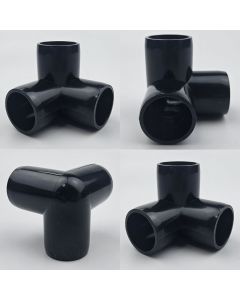 4-PK 3/4 in. 3-Way Black PVC Elbows ASTM SCH40 Furniture-Grade Corner Fittings$9.95Free USA Shipping
 -
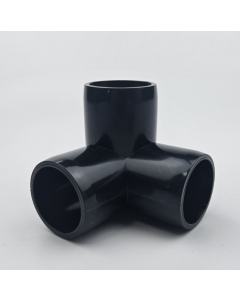 Black 1/2" 3-Way PVC Elbow Fitting ASTM SCH40 Furniture-Grade Fitting$0.65 As low as $0.590 in stockOut of stock
 -
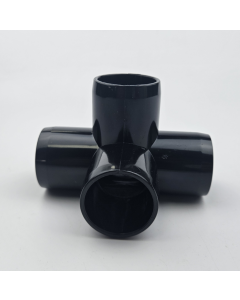
-
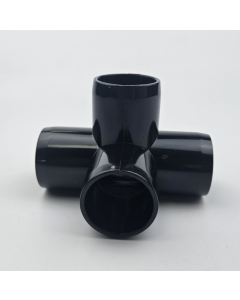 Black 3/4" 4-Way PVC Elbow ASTM SCH40 Furniture-Grade Fitting$0.83 As low as $0.750 in stockOut of stock
 -
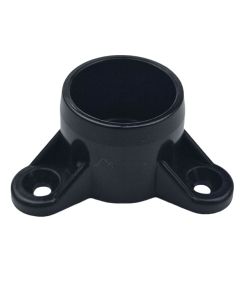 Black 3/4" PVC Table Screw Cap ASTM SCH40 Furniture-Grade Fitting$0.82 As low as $0.74521 in stock
 -
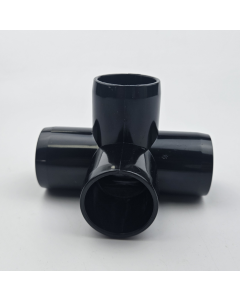 Black 1" PVC 4-Way Elbow Fitting - ASTM SCH40 Furniture-Grade Connector$1.75 As low as $1.580 in stockOut of stock
 -
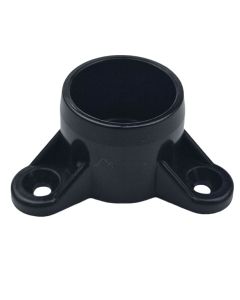 Black 1" PVC Table Screw Cap Fitting - ASTM SCH40 Furniture-Grade$1.25 As low as $1.13462 in stock
 -
-
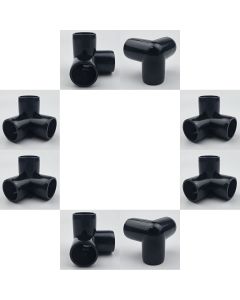 8-PK 3/4 in. 3-Way Black PVC Elbows ASTM SCH40 Furniture-Grade Corner Fittings$13.95Free USA Shipping
 -
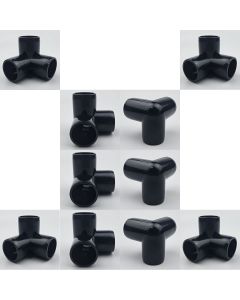 10-PK 3/4 in. 3-Way Black PVC Elbows ASTM SCH40 Furniture-Grade Corner Fittings$14.95Free USA Shipping
 -
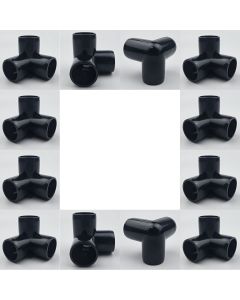 12-PK 3/4 in. 3-Way Black PVC Elbows ASTM SCH40 Furniture-Grade Corner Fittings$15.75Free USA Shipping
 -
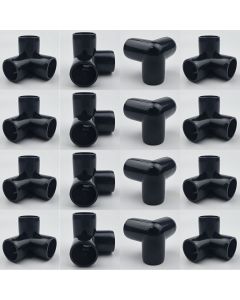 16-PK 3/4 in. 3-Way Black PVC Elbows ASTM SCH40 Furniture-Grade Corner Fittings$17.95Free USA Shipping
 -
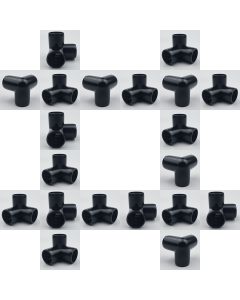 20-PK 3/4 in. 3-Way Black PVC Elbows ASTM SCH40 Furniture-Grade Corner Fittings$19.95Free USA Shipping
 -
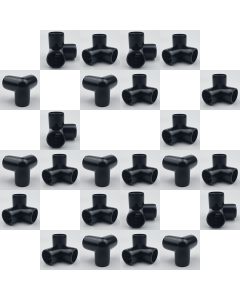 24-PK 3/4 in. 3-Way Black PVC Elbows ASTM SCH40 Furniture-Grade Corner Fittings$20.95Free USA Shipping
 -
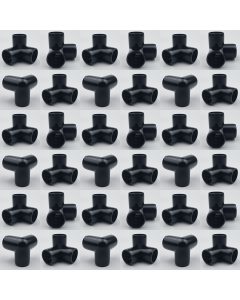 36-PK 3/4 in. 3-Way Black PVC Elbows ASTM SCH40 Furniture-Grade Corner Fittings$35.97Free USA Shipping