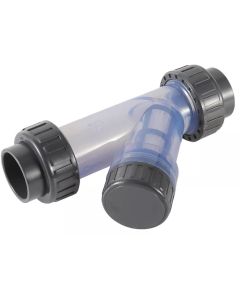
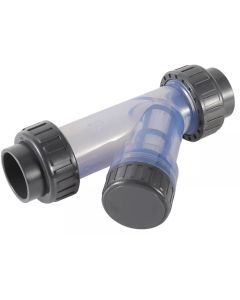
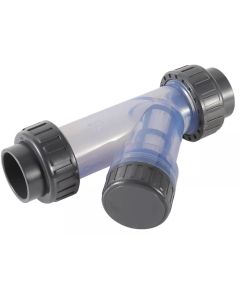
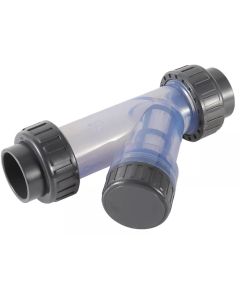
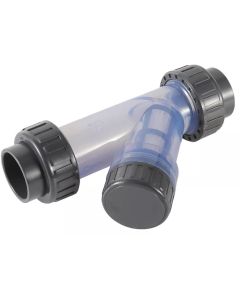
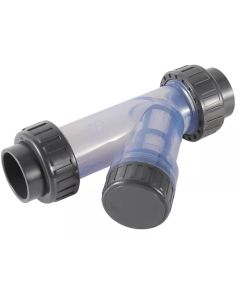
Why use a Schedule 80 Y-Filter (Y-strainer)?
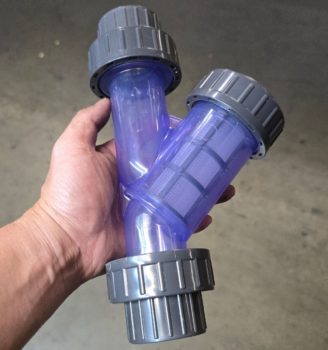
A “Y-filter” (or Y-strainer) is a fitting in the shape of a “Y” that contains a mesh or perforated basket to trap debris (sand, rust, scale, etc.) before the fluid continues downstream. The “Schedule 80” refers to the wall thickness rating (stronger than Schedule 40). Here are the key advantages and use cases:
| Benefit | Explanation / Reason |
|---|---|
| Higher strength / pressure rating | Schedule 80 has thicker walls, so it can operate at higher pressures or more demanding environments. |
| Better durability / longer life | Thicker walls resist wear, impact, UV, or chemical degradation better over time. |
| Protection of downstream equipment | The Y-filter catches particles before they reach sensitive components (pumps, valves, sensors), reducing damage, clogging, and maintenance. |
| Lower turbulence / smoother flow | The Y shape causes less turbulence than a T fitting, which helps maintain stable flow and reduces pressure drop. |
| Ease of maintenance | You can remove the strainer basket/cap without removing the entire unit from the line for cleaning. |
| Suitable for harsher / corrosive environments | Especially useful when dealing with chemical fluids, UV exposure, or more aggressive conditions where Schedule 40 might degrade sooner. |
| Reduces downtime / operational risk | By filtering early, you reduce the chance of sudden failure or clogging, which can force shutdowns. 247Garden highlights this in their product blog. |
So, in short: if your system sees moderate to high pressures, or if debris/sediment is a concern, or you want to protect downstream parts, a Schedule 80 Y-filter is often a wise choice.
What to watch for / how to pick one
When choosing a Schedule 80 Y-filter, check:
- Pipe size / connection type — match your line’s diameter and whether you use socket, threaded, flanged ends, etc.
- Mesh / perforation size — how fine a filter you need. If it’s too coarse, debris will pass; too fine, it clogs too fast.
- Material / chemical compatibility — ensure the filter’s body and basket (mesh) are compatible with your fluid (e.g. corrosive chemicals, solvents).
- Pressure / temperature rating — the filter must handle the operating conditions.
- Ease of cleaning / maintenance access — look for union ends or easy-remove caps.
- Brand / quality / warranty — choose a trusted manufacturer to reduce failure risk.
Recommendation Y-Filters from 247Garden
- A clear PVC or opaque Schedule 80 Y-strainer, true-union style, with removable cap / basket
- Mesh (for example, 20 mesh) standard but options for finer
- Socket or threaded ends depending on your piping
- Rated for 100–150 psi (or per your system)
- Easy maintenance: cap accessible, removable screen
Related Products